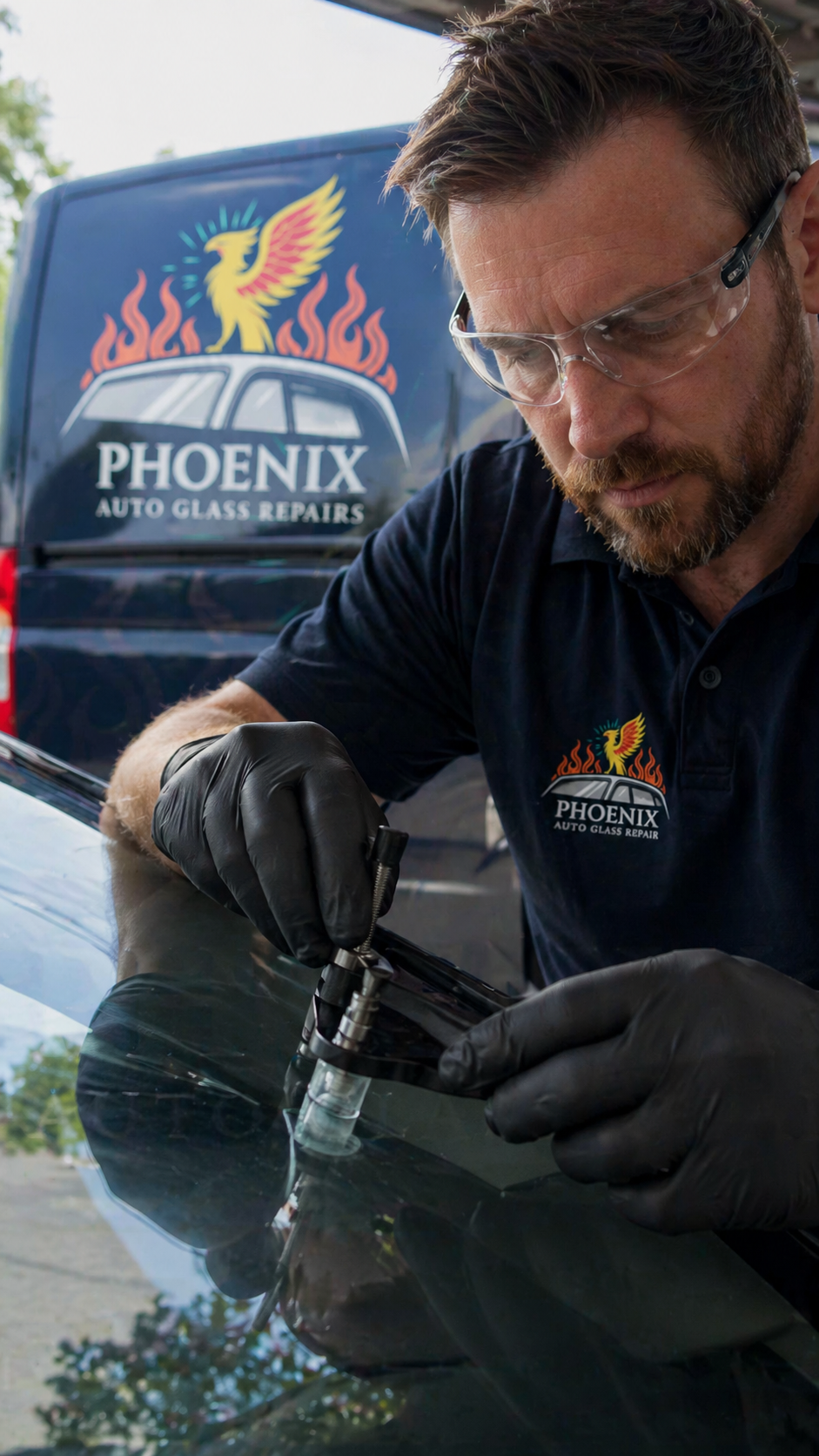
Professional chip and repairable crack service that restores strength and improves clarity. Resin injection and controlled curing with a quick repairability inspection before every appointment.
Small impact damage can change fast, so this section clarifies what we typically repair and how we evaluate damage patterns before service begins. The goal is to stabilize the break, improve clarity where possible, and help reduce spreading under normal driving conditions.
We repair common impact damage such as rock chips and stone breaks that create a pit and fracture lines around the impact point. Repair resin fills the break structure to improve optical clarity and reinforce the damaged area.
Some small cracks can be repaired based on inspection. Repairability depends on crack length, depth, location, and edge proximity. If the crack pattern shows high spread risk, we will explain what we see during assessment and confirm the right next step.
We regularly assess and repair these windshield break patterns when repairable:
Not every chip or crack is a good candidate for repair. These inspection factors affect repair results including strength, appearance, and long-term durability.
We evaluate chip diameter and pit depth, crack length and shape, and depth into the glass layers and fracture leg structure.
Location affects safety and repair performance. We check edge proximity including edge impact points and edge cracks, visibility area in the driver's line of sight, and stress concentration zones where cracking spreads faster.
Windshield damage collects debris fast. We look for dirt and road grit inside the break, moisture intrusion, age of the damage, and surface wear around the impact point.
We consider conditions that increase crack growth: temperature swings, road vibration and chassis flex, repeated impacts, and existing stress cracks near the damage.
We confirm break type, glass condition, and repairability criteria. The area is prepared so the repair is clean and controlled.
Specialized repair resin is injected into the damaged area to fill microfractures. Controlled pressure and vacuum cycles reduce trapped air so the resin bonds through the break structure.
After resin injection, the repair is cured and finished for a smooth surface. The final step levels the cured resin and polishes the area for better appearance and a clean feel.
Windshield repair is intended to reinforce the damaged area and improve clarity, not erase the damage completely. This section sets realistic expectations so you know what outcomes to look for after service.
A successful windshield repair restores strength in the damaged area and helps reduce the chance of spreading from vibration and temperature changes. It stabilizes and reinforces the break.
Most repairs improve clarity, yet a faint mark may remain, especially with older damage, deep chips, or contamination. The priority is a stable repair with improved optics and a finished surface.
A quality repair is built to hold up in normal driving conditions. Longevity depends on the original break type, resin fill quality, and contamination level at the time of service.
Pricing is based on measurable repair factors, and insurance coverage depends on your specific policy. This section explains what affects cost and how we can support the service details your insurer may request.
Windshield repair pricing depends on factors such as damage type including Bullseye, Star Break, Half Moon, and Combination Break; size, depth, and fracture leg density; location including edge proximity and visibility area impact; number of chips on the windshield; and contamination level and moisture presence.
Many vehicle owners use comprehensive coverage for windshield repair. Coverage and out of pocket cost vary by policy and carrier. If you plan to use insurance, we can provide the service details your insurer typically requests.
Request a quote with a brief description of the damage, chip count or crack description, and photos if your booking flow supports it.
We focus on clean resin fill, stable bonding, and a finished surface that supports strength and clarity outcomes.
You get a clear repairability answer, simple scheduling, and realistic expectations about visibility after repair.